The dilation, accompanied by gastric torsion in dogs, represents an important medical emergency.
What is happening?
- The stomach is full of air and excessive relaxation of
- Following the relaxation, the stomach turns around its axis due to the fact that there is no ligament to keep it in place, captured by the abdominal wall, as in the case of man.
Why is it happening?
- This emergency is more common in large breeds, with a deep and narrow breast (great Danish, Weimaraner, Romanian shepherd, San Bernard, Irish setter, Corso Corso)
- It can manifest itself after the dog eats a large amount of food in a very short time or drinking, greedy, a lot of water
- Fermentary foods (e.g. corn derivatives, bread, etc.) increase the risk of gastric dilation
- Agitation immediately after the meal
How does it manifest clinically?
- The left side of the abdomen is visibly swollen and in tension
- When performing percussion, the abdomen sounds like a drum
- The general position of the dog is upside down
- Difficulty breathing
- Try to regurgitation but fails
- Hypersalivation
- The apparent mucous membranes can become pale (from pink, the color can migrate to the pink/white track)
What do we do?
- The dog should be positioned on the right side and the head and the chest must be higher than the abdomen
- Call the ambulance or brings the animal from the doctor as soon as possible
What happens when we come from the doctor?
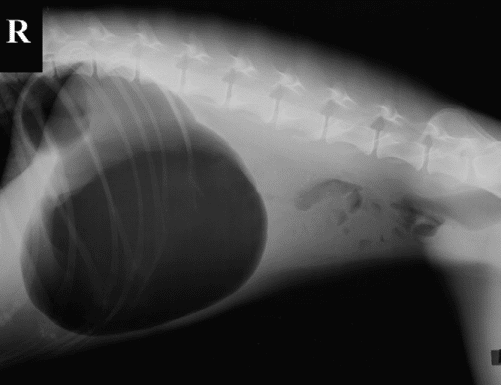
Immediately after the anamnesis, the doctor will consider the possibility of gastric dilation and twist. First of all, a X -ray must be made to be able to diagnose certainty.
In the image we have the classic appearance of «Strumf» which confirms that it is GDV.
How do we deal with?
The only treatment option is emergency surgery. The longer the gastric twist, the greater the chances of appearing more complications, including the death of the animal. Before the surgical intervention, blood tests will be performed and fluidotherapy will begin.
read more Ultrasonic aspects of the adrenal glands in DiHor
Surgery is used because other treatment methods can damage the dog and lead to death because of their inefficiency.
Post-operator
Normally, after surgery, the dog should remain admitted for 24-48 hours for monitoring, during which fluids and intravenous treatments will be administered. The patient will be monitored ultrasound and radiologically, vital functions (heart rate, impulse, respiratory frequency, temperature, etc.) will be carefully monitored and will be guided for recovery by the medical team.
At the time of discharge, the doctor will prescribe a treatment suitable for patient needs.
How can we prevent GDV?
Gastric torsion can be prevented by surgery (pexia) which provides for the capture of the stomach from the abdominal wall, this does not allow its twist around its axis.
read more Has your cat fallen from the floor? Find out what to do immediately
Conclusion
Gastric Dilatation-Volvulus (GDV), commonly known as gastric torsion or bloat, is one of the most serious medical emergencies that can affect dogs. The condition develops rapidly and can become fatal within a matter of hours if immediate veterinary treatment is not provided. Understanding the importance of early recognition, prompt surgical intervention, and proper postoperative care greatly improves the chances of a successful recovery and helps protect your dog’s long-term health.
The time after surgery is very crucial, just like the surgery itself. Close observation in a veterinary clinic helps medical staff notice possible problems, control pain well, give intravenous fluids, and make sure that important organs keep working properly. Careful watching of heart rate, breathing, body temperature, blood flow, and digestive healing gives the best chance for a smooth recovery. Once your dog is back at home, it is important to follow the vet’s advice about medicines, feeding times, exercise, and follow-up visits for full healing.
Prevention is also very important in lowering the chances of GDV, especially in breeds that are more likely to have this issue. Preventive gastropexy is known as one of the best ways to reduce the risk of stomach twisting by fixing the stomach to the abdominal wall for good. While this procedure does not entirely stop stomach swelling, it greatly lowers the chances of the dangerous twisting that makes GDV so severe. Many vets suggest doing gastropexy at the same time as regular procedures like spaying or neutering for dogs at high risk.
In addition to preventive surgery, owners can further lower the risk by adopting healthy feeding and lifestyle practices. Feeding smaller meals throughout the day instead of one large meal, avoiding vigorous exercise immediately before or after eating, providing a calm eating environment, and ensuring access to fresh water are all practical strategies that may contribute to digestive health. Being familiar with the early warning signs—such as abdominal swelling, unsuccessful attempts to vomit, excessive drooling, restlessness, or signs of pain—allows owners to seek emergency veterinary care without delay.
read more Everything you need to know about babies
Ultimately, the best defense against gastric torsion is a combination of education, prevention, and rapid action. Responsible pet owners who understand the risks and recognize the symptoms are better prepared to respond quickly if an emergency occurs. Through preventive veterinary care, appropriate surgical intervention when recommended, and diligent postoperative management, dogs affected by GDV can have a much greater chance of recovery and continue to enjoy healthy, active, and fulfilling lives alongside their families.
latest posts published
The health of the joints in dogs – more important than you would have thought!
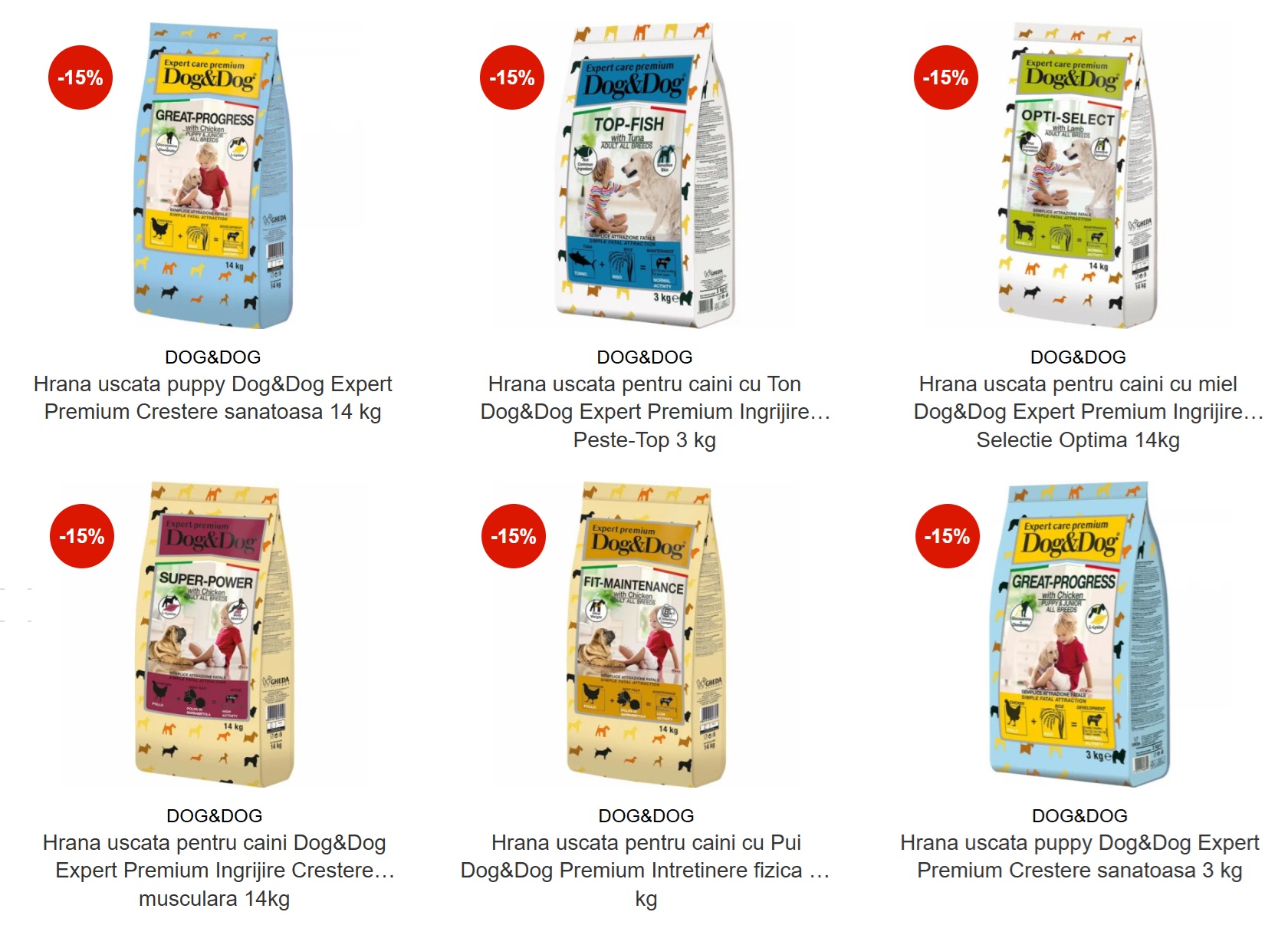
Everything you need to know about Dog & Dog – Dry Dog Food
Obesity in dogs and what should be done?
The dog needs to have a happy, balanced and healthy pet
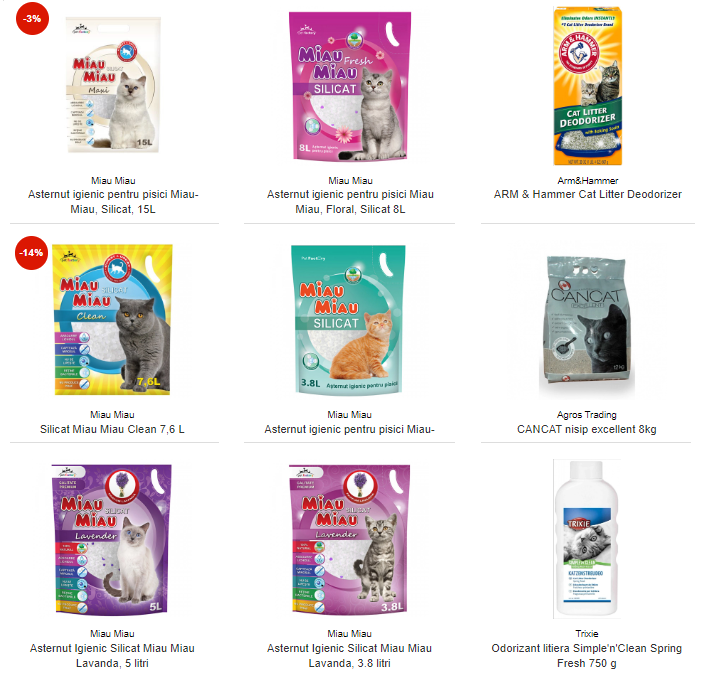
How do you choose and how do you use cat sand?
How do we help pets during winter holidays, full of strong noises and noises
The benefits of fish in the diet of our empty spaces
The joy of having a cat
Golden Retriever, an energetic and favorite breed of children