
The Basenji breed has a story deeply connected to African customs and heritage, being seen as one of the oldest dog breeds. Coming from central Africa, especially in areas around the Congo, Basenji was utilized by local tribes, such as the Pygmies, for hunting small and medium-sized game. These dogs were vital in hunting due to their skill in managing traps and their strong instincts to pursue the prey.
Regarding archaeological findings, dogs that looked like today’s Basenji appeared in ancient Egyptian artwork. On temple walls and in Egyptian graves, images and statues have been discovered that hint at the existence of dogs similar to Basenji, highlighting their significance in Egyptian culture and their roles in hunting and possibly in religious practices.
Basenji – The dog who does not bark but conquers our hearts
Until the late 19th century, Basenji was largely unknown outside Africa. At that time, European explorers started bringing Basenji dogs to Europe. The early efforts to introduce the breed outside Africa were often hindered by illnesses, particularly by a disease called Carre’s disease, for which the dogs lacked immunity, leading to many dogs brought dying.
In African societies, Basenji held a spiritual significance, seen as dogs with magical abilities and regarded as important companions in everyday and spiritual life.
read more 10 reasons why pets take weight without realizing
Almost a century later, in the 1930s, important advancements were made in breeding and enhancing the breed in Europe and the United States. This led to stronger and healthier bloodlines being developed.
During this time, Basenji began to gain official recognition from various clubs, including the Kennel Club in the United Kingdom and the American Kennel Club (AKC) in the United States. Nowadays, Basenji is acknowledged and admired not just for its unique looks and hunting abilities, but also for its distinct character and «barkless» behavior, which means it cannot bark. Instead of barking, Basenji makes a special sound, resembling a yodel, called «baro,» due to the unique shape of their larynx, which differs from other dogs.
As a result, the breed has become popular as a pet in many nations around the world while still maintaining a deep connection to its roots and African history.
For additional care, select hygiene products from the Petmax.ro store!
Miniature elegance: Basenji’s physical features
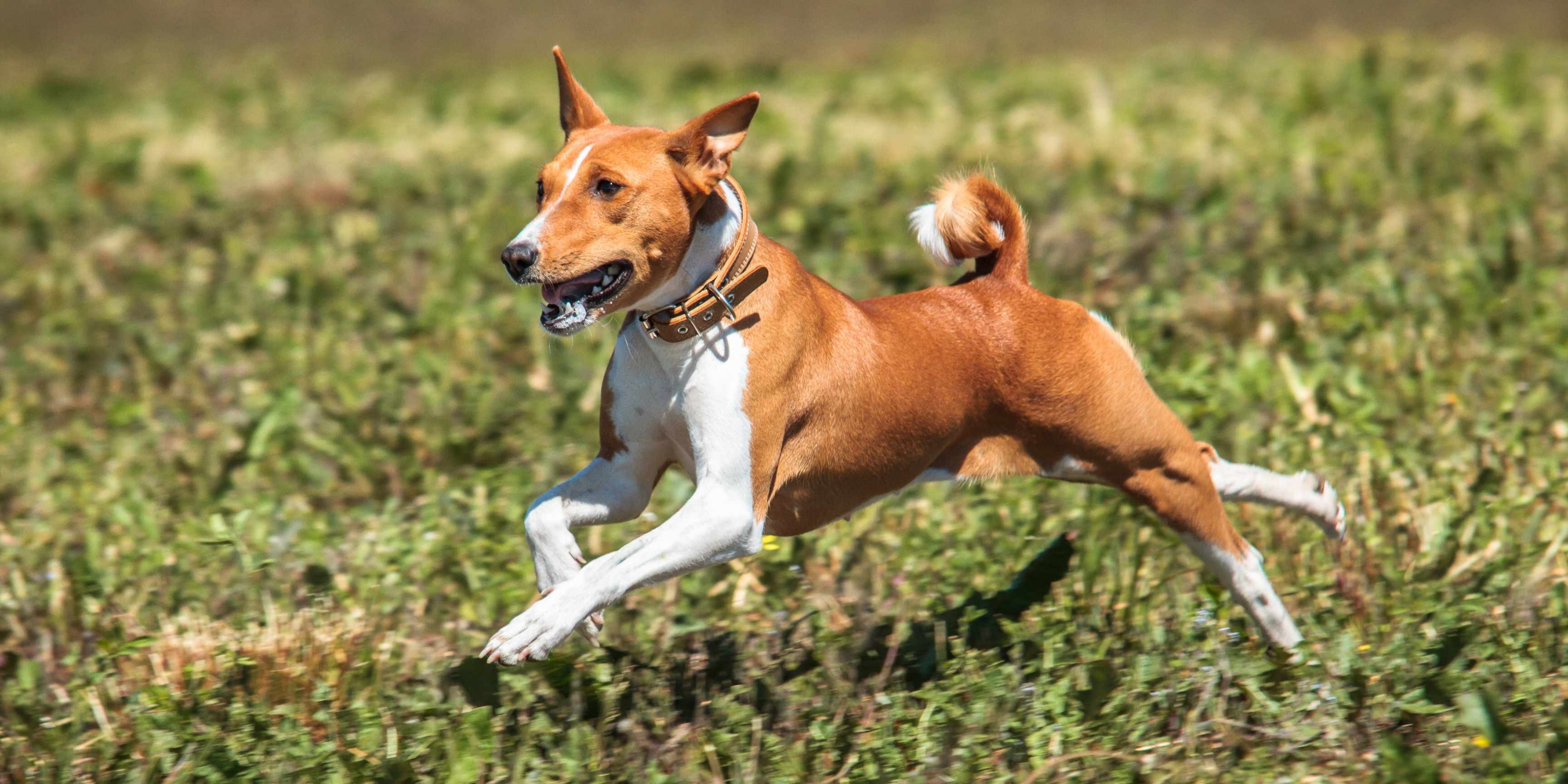
Basenji is a small dog, standing about 40-43 cm tall and weighing 9-11 kg. Its body is compact, strong and well balanced, with a graceful and athletic look. The head is long, with a flat top and a pointed nose. The eyes are almond-shaped, usually dark, providing an intelligent and alert look. The ears are small, upright and sharp, located on the head, adding to its watchful look.
 English Bulldog – From «Canine Gladiator» to the adorable companion
The tail is medium thick, curling tightly over its back. The coat is short, soft and shiny, often coming in various colors like red, black, tricolor (black, white and red) or spots, always featuring white markings on the chest and tail tip. Basenji is known for not having the typical dog smell and for not barking, but rather makes a sound that resembles a Yodel, referred to as «baroo,» as previously mentioned.
Order the right food here for your dog
A free spirit: Basenji’s personality and behavior
Basenji is a smart, independent and curious dog, recognized for having a behavior similar to that of a cat. They are very loyal to their family, but may be shy around strangers. These dogs are very active and require a great deal of physical and mental exercise, as they tend to explore and seek adventures because of their hunting instincts.
Although they do not bark, Basenji communicates with different sounds and facial cues, being quite expressive.
They are dogs with a strong will and can sometimes be stubborn, which might be challenging. At the same time, they enjoy routine and may feel anxious or bored if left alone.
 Because Collie is one of the most loved breeds in the world
Basenji has a playful spirit and is often affectionate, but it can show a tendency to be dominant, needing a firm and consistent owner. Being curious dogs, they are always watchful and may act cautiously in new situations.
They are also well-known for their cleanliness, maintaining habits similar to those of cats regarding self-care.
Basenji is an excellent hunting dog, traditionally used for managing prey in traps due to its speed and strong instincts. In rural Africa, it is still utilized for hunting small to medium-sized game. Furthermore, because of its independent and alert nature, it can also serve as a good guard dog, despite not barking.
In a home setting, Basenji is an active and loyal companion, perfect for individuals or families who lead an active lifestyle and appreciate a dog with a strong character and need for mental engagement.
Take a look at the article The unknown connection between prebiotics, probiotics and dog health
How to train a rebel: Basenji’s training
Basenji’s training can be challenging because of its self-reliant and occasionally headstrong personality. It is a clever dog, but it likes to decide for itself, so standard training techniques may not always work. Training should be focused on patience, regularity, and positive rewards, as Basenji reacts more favorably to encouragement than to punishments. Beginning training at a young age is crucial to set up guidelines and boundaries. Proper socialization is also important to avoid shy or nervous behaviors with strangers or unfamiliar situations.
Care without hassle: what Basenji’s upkeep involves
Basenji needs very little upkeep because of his short, smooth, and scent-free coat. He does not require regular baths, and brushing once a week is enough to get rid of loose fur. He is a very tidy dog, with habits similar to felines. The ears should be checked and cleaned regularly to avoid infections, and teeth need to be brushed consistently to keep dental health. The nails should be trimmed as needed to ensure comfort. Basenji requires plenty of daily exercise and mental engagement to stop boredom and bad habits.
read more Carpathic shepherd – The full of hope of man and flock
A fit dog but with hereditary issues: Basenji’s health
Basenji is usually a robust breed, but it can be prone to specific inherited conditions. These include Fanconi syndrome, which is a kidney issue that affects electrolyte absorption, and progressive retinal atrophy, which may lead to blindness.
Other frequent health concerns include hip dysplasia and low thyroid function. It is essential to carry out genetic tests to identify possible hereditary illnesses. Basenji typically lives for about 12-16 years and needs regular vet visits to keep in good health. A balanced diet and consistent exercise are critical to avoid obesity and maintain fitness.
Read the article Do your dogs need more exercise? Find out now.
Basenji in the lives of famous people: style and uniqueness
The Basenji breed has attracted the interest of many well-known figures over the years because of its special traits and striking appearance.
Barbara Woodhouse – The well-known British dog trainer, famous for her training programs and books, owned a Basenji and admired the breed greatly.
Frida Kahlo – The Mexican artist recognized for her vibrant and personal paintings had a Basenji who frequently appeared in her life and art.
Katharine Hepburn – The legendary Hollywood actress was known for her affection for dogs and owned a Basenji, reflecting her elegant and refined style.
James Dean – The American actor icon of the 1950s, noted for his bold roles, also had a Basenji, representing his rebellious and independent spirit.
Diana Vreeland – The well-known fashion editor and influencer in the fashion world was recognized for her extravagant and classy taste, and had a Basenji, which fit her sophisticated style.
These figures selected Basenji for their unique traits and distinct personalities that matched their styles and personal tastes.
latest posts published
The health of the joints in dogs – more important than you would have thought!

Everything you need to know about Dog & Dog – Dry Dog Food
Obesity in dogs and what should be done?
The dog needs to have a happy, balanced and healthy pet

How do you choose and how do you use cat sand?
How do we help pets during winter holidays, full of strong noises and noises
The benefits of fish in the diet of our empty spaces
The joy of having a cat
Golden Retriever, an energetic and favorite breed of children