

Whether it’s a parasite, a serious injury or a more complicated illness, we often see patients, both dogs and cats, who need a blood transfusion. To ensure we have enough donors ready during these urgent times, we provide helpful information about what this donation means and what the process involves.
Blood donation in dogs
The system used to classify blood types in dogs is called the DEA system. There are several blood types (like 1, 3, 4, etc.) but the key factor is whether the patient is 1 positive or negative (which indicates the presence or absence of an antigen on red blood cells). Dogs that are 1 positive are considered universal recipients and those that are 1 negative are universal donors.
An ideal donor is an adult dog weighing at least 25 kg, between 18-24 months old and up to 8 years, vaccinated and updated, and considered healthy at the time of donation.
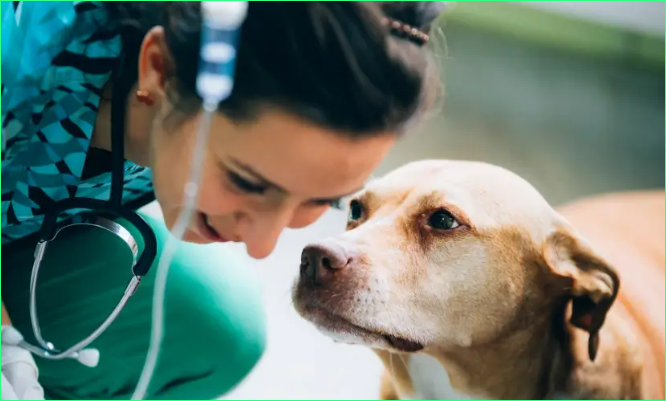
 Suggestions for the adequate care of senior dogs
Step 1
Blood type testing and clinical examination. After that, if the vet’s clinical assessment suggests it, further tests (like a hemolytic test, blood chemistry, etc.) may be done. It is advised to examine the blood for eMoparasites (using a 4DX test, blood cytology).
Step 2
Donation. The area around the neck may be clipped and thoroughly cleaned so it is sterile. Blood collection takes about 8-12 minutes and around 450 ml of blood is gathered. This is done while the dog lies on its side or in a sitting position.
Usually, the donation process in dogs can be completed without sedation. However, there are occasions where the vet might request light sedation to make the procedure smoother and reduce stress for the donor.
On the day of donation, dogs should avoid excessive activity, and any pressure around the neck area should be minimized. Water is provided freely along with a small food treat.
read more Fast First Aid | When to apply RCP to dogs and cats?
For dog donations, they can take place every 2-3 months
Blood donation to cats
In the case of cats, the blood groups are A, B and AB. Most cats are group A, a group of small parts B and very rarely ab. Transfusions are made only between cats with the same blood group, the exception is the AB group which is a universal recipient.
An ideal candidate for donation is an adult cat of at least 4 kg, aged between 18 months and up to 8 years, vaccinated and updated, with negative viral tests (IVF/Felv). A cat can give once every 3-4 weeks, but it is recommended to perform blood analysis (hemolyteogram) if it has donated 2-3 times in a row.
In the case of cats, sedation is often a necessity. Although it is a painless job, cats associate events, such as the vet, with stress. Consequently, sedation causes the process to last less, is performed without unpleasant events for the donor or owner. About 50 ml of whole blood are collected.
read more What do you need to know to save their lives
A big difference between the two species is that, in the case of dogs, blood storage can be used for a fixed period or its separation on the components while the blood collected by the cats must be used within 24 hours of donation. In addition, its separation on the components is still a process that is not available at a general level. As in the case of dogs, the day of donation, excessive physical activities will be limited and the cat will be supervised.
Any medical work can have complications.
In the situation of giving blood, the problems are few and do not change how long the animal lives in any way. First on the timeline, the main issue that might happen is that the patient doesn’t complete the donation. This may occur if the animal is not given sedation or does not have the required calmness or experiences side effects (like fast breathing, fast heartbeat, excessive drooling, etc.) that cause the stopping of the process. We see these problems very seldom since the task is always done in a quiet, private place, free from stressful distractions.
Another issue could be the formation of a hematoma (build-up of blood at the needle site). This happens a few times, but it usually resolves within 24-48 hours.
To sum up, blood donation for pets is a fairly simple task, carried out with low stress, which does not harm your animal’s life and, like in humans, helps to save lives. If you also have a suitable animal and wish to join the donor program, we are here for further details or to assist with the donation.
read more Urinary obstructions in cats
Feel free to reach out to us with any questions, and remember: one day you might need a donor for your pet!
latest posts published

The health of the joints in dogs – more important than you would have thought!

Everything you need to know about Dog & Dog – Dry Dog Food

Obesity in dogs and what should be done?

The dog needs to have a happy, balanced and healthy pet

How do you choose and how do you use cat sand?

How do we help pets during winter holidays, full of strong noises and noises

The benefits of fish in the diet of our empty spaces
The joy of having a cat

Golden Retriever, an energetic and favorite breed of children