
Author: Veterinary assistant – Monica Mustțea
There is a broad spectrum of external parasites (ectoparasites) that can be a potential risk to the health of pets, which is why the choice of ideal pesticide treatment can be difficult for animal owners.
Due to climate change and permissive laws for the circulation of pets between European countries, the epidemiological situation has a dynamic character. The diseases that once had a low frequency in some areas are increasingly common today.
In the category of ectoparasites are included the parasitic arthropods that feed on the surface of the guest, such as: ticks, mites (scabies) and insects (fleas, mosquitoes, lice, phlebotomes).
read more Tips for the care of dog chicks
The ectoparasites are responsible for the transmission of infectious agents: viruses, bacteria, parasites (protozoa and helminths), which act as vectors. They can also transmit zoonosis, constituting a danger to humans, in particular children.
In these circumstances, veterinary doctors are a real help as regards the choice of treatment for the ideal of deworming for the epidemiological situation of the area, they are aware of the latest recommendations issued by parasitologists and public health, but also by pharmaceutical products available on the market.
External deworming is essential for:
- control of zoonosis (contagious infections common to humans and animals);
- Prevention of diseases transmitted through carriers;
- Guarantee animal health and welfare.
Symptoms of parasitic infestation
read more Gingia disorders in cats: symptoms and treatment
The clinical signs of parasitic animals vary mostly depending on the degree of infestation, but also of the in competition diseases and parasitic species. Among these we can mention: intense itching (which can lead to car injuries -elp), apathy or hyperthermia. Ectoparasites also cause skin lesions that can cause secondary infections and induce immunological responses (e.g. allergic dermatitis with fleas).
diagnosis
The diagnosis is generally made on the basis of anamnesis, clinical signs and paraclinical investigations (CO -Parasitological examination, scraper, microscopic evaluation of tissues or secretions that have occurred at the skin level, hematological examination, etc.).
The fleas are mainly in the back-Lumbar area, at the level of the abdomen or in the internal region of the thighs, while the ticks are more frequently in the ears, in the axes, perineal and interdigital.
read more Frostbite, the unpleasant part of winter for our quadruple friends
Prevention is better than the treatment …
Informing and educating the owners about the need for a periodic external deworming is the key element to avoid an infestation.
The steps for appropriate prevention include:
- simultaneous treatment of all animals in the same home;
- apply the prophylactic treatment according to the instructions of the veterinarian or manufacturer;
- avoid contaminated areas and animals;
- Environmental disinsection.
Treatment
read more The importance of the examination co -parasitological in pets
The antiparasitic treatment can be prophylactic (prevents the animal’s infestation) or therapeutic (eliminates parasites already on the guest). The official recommendation of Eccap (European animal parasites of scientific companions) is to guarantee repellent treatment throughout the year, regardless of the climatic conditions.
When choosing an antiparasitic product, several factors must be taken into consideration:

- endemic areas for different parasites;
- the lifestyle of the animal, but also of the owner;
- species, age, size and weight of the quadruped;
- physiological characteristics (gestation, lactation);
- contact with infested animals;
- season;
- competing diseases (liver/kidney pathologies);
- The owner’s preferences.
The antiparasite products are marketed in different pharmaceutical forms:

- Spot-on solutions: they have an effect from a few weeks to 2-3 months and apply to the base of the neck, between the shoulder blades, which continue along the back of the animal, to prevent the possible ingestion of the product;
- Graffi: the variant that offers the longest protection (up to 8 months);
Shampoo: usually, it is used together with other antiparasite products, only by completing the treatment in case of a serious infestation; - Chewable tablets: it is ingested with or without food and offers protection of up to 3 months, without any reduction in the bathroom from the effectiveness of the protection (if the animal vomits up to 3 hours after administration, the antiparasitic effect is not installed);
- Dust: often used for young animals, the administration is carried out in the opposite direction of hair growth, throughout the body;
- Spray: is applied similar to dust.

All topical substances (which are applied to the skin) offer protection that can be reduced to prolonged exposure to water. In addition, each antiparasitic product has specific recommendations on the bathroom and exposure to water so as not to minimize the effect of the product. It is recommended to read carefully from the owners of the prospects of antiparasita products.
It is essential to combine several pharmaceutical products to obtain an optimal result that is made by establishing an appropriate strategy together with the vet.
Resistence
By making a parallel with already the famous resistance of bacteria to antibiotics, in this case, we can speak of the possibility of a similar phenomenon between parasites and repellent or parasite substances.
Although resistance to antiparasita products has not been described in pets in Europe, there are some recommendations to prevent this problem:
- The antiparasite products must be used according to the dose of the perspective;
- Avoid subdose;
- Avoid greater frequency administration;
- Monitor the effectiveness of used antiparasite products;
- Once a product loses its efficiency, it must be replaced with another containing active substances from another chemical class;
- Avoid products that are not approved for the external roller.
Toxicity
As a basic rule, antiparasitaries should not be used for animals in pregnancy, those who are breastfeeding or for the youngest unless the product is mentioned in the flyer of the product for these categories or if they are administered to the instructions of the veterinary doctor.
As with most substances, the dose makes the difference between the therapeutic and toxic effect, and this varies according to the species, weight, existing pathologies and other physiological characteristics.
CAREFUL!!!! Intiparasitic products should be used only for species mentioned in the prospectus.
In conclusion, the external rolomization in pets is essential for the well -being of the Quadruped but also to avoid the transmission of Zoogoze. Fortunately, at the moment, on the pharmaceutical market there are various antiparasite products which, alone or combined, can reduce almost 0 of these risks. The decision to apply these products must be taken together with the vet according to the epidemiological situation in the area, the preferences of the owners and possible physiological or pathological states in which the patient is found.
Main photo source: wagwalkingweb.com
Bibliographic references
- Ettinger J. Stephen, Feldman C. Edward, Côté Etienne (2017), Book of Text of Veterinary Internal Medicine, Eighth Edition, Editura Elsevier
- Mehlhorn Heinz (2012), Animal Parasites, Springer Publishing House
latest posts published

The health of the joints in dogs – more important than you would have thought!
Everything you need to know about Dog & Dog – Dry Dog Food

Obesity in dogs and what should be done?

The dog needs to have a happy, balanced and healthy pet
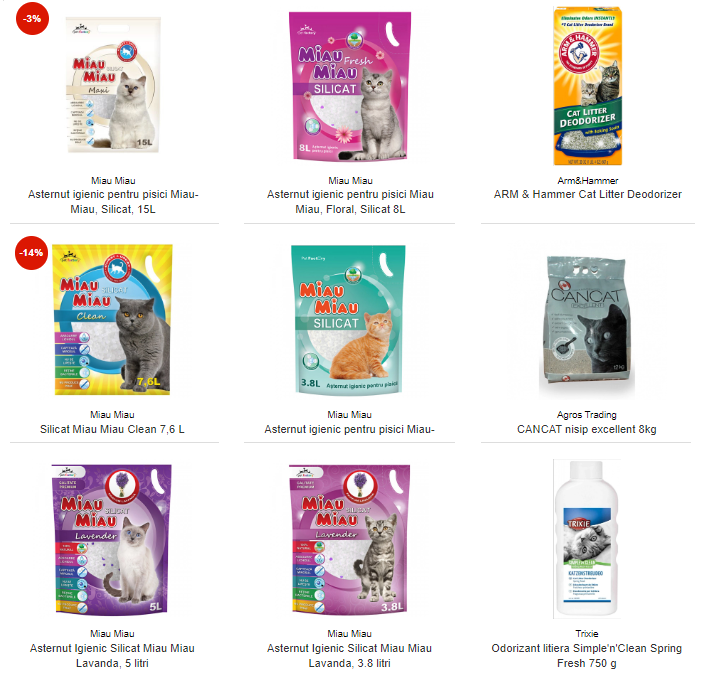
How do you choose and how do you use cat sand?

How do we help pets during winter holidays, full of strong noises and noises

The benefits of fish in the diet of our empty spaces

The joy of having a cat

Golden Retriever, an energetic and favorite breed of children